Keeping developers at home as Facebook became Meta
When Facebook became Meta, the logo was the small part. The company changed how it described itself, its platforms, and where it was going.
For developers, that kind of change can be unsettling. New names, new structure, new ways of thinking, and the tools they depend on still have to work every single day. We worked with Meta to keep the developer experience steady through all of it.
The context
A new name, millions of builders
- A major company rebrand underway
- Developer workflows that were years old and in daily use
- Docs and platforms that had to change without confusing anyone
- A need for calm rather than fireworks
The role we played
Translators and steady hands
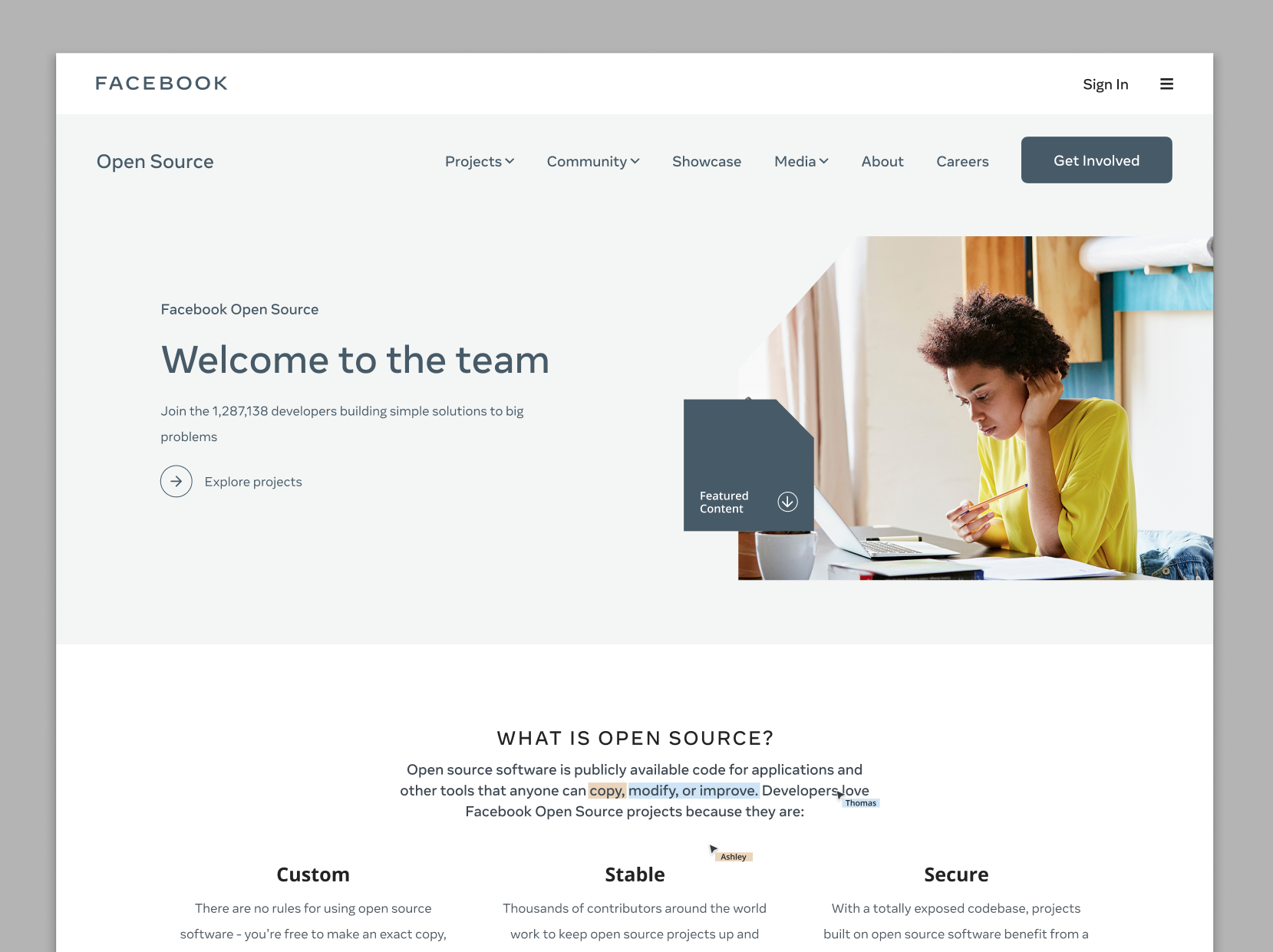
We partnered with Meta for Developers and Meta Open Source on brand, UI design, developer relations, strategy, and information architecture. Most of the work was translation: taking a big new company identity and turning it into interfaces and docs developers could rely on, with as few surprises as possible.
We've learned that the most respectful thing you can do in a rebrand is not make people relearn what already works.
What we built together
Systems people use every day
- Developer-facing UI that matched the evolving Meta brand
- Information architecture that held up during the transition
- Docs that told the new platform story without scrambling what developers already knew
- Developer Experience work that put continuity and trust first
- The new brand, translated for people who live in docs and terminals
The outcome
Change without the headaches
- A developer presence that kept pace with the company's transformation
- Docs and interfaces developers could keep trusting
- Developers supported through the change without slowing down
With the whole industry watching, a light touch was the right call.
The takeaway
Great platforms can change without making people start over.
The best rebrands are quiet where it counts. Keep the systems underneath solid, and people barely notice the move.